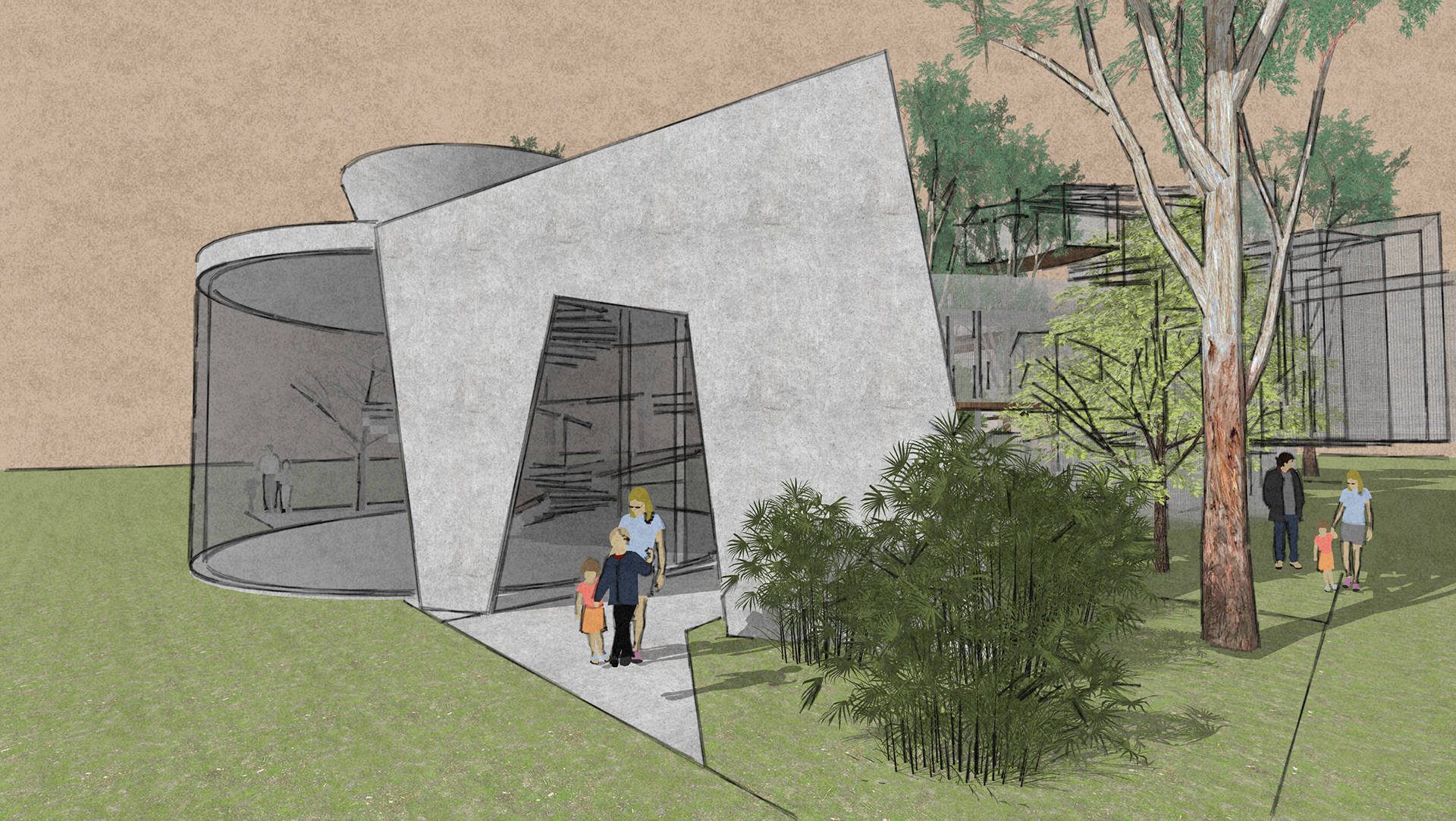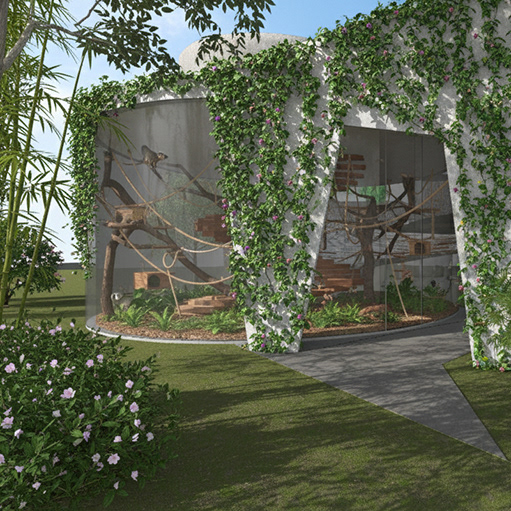
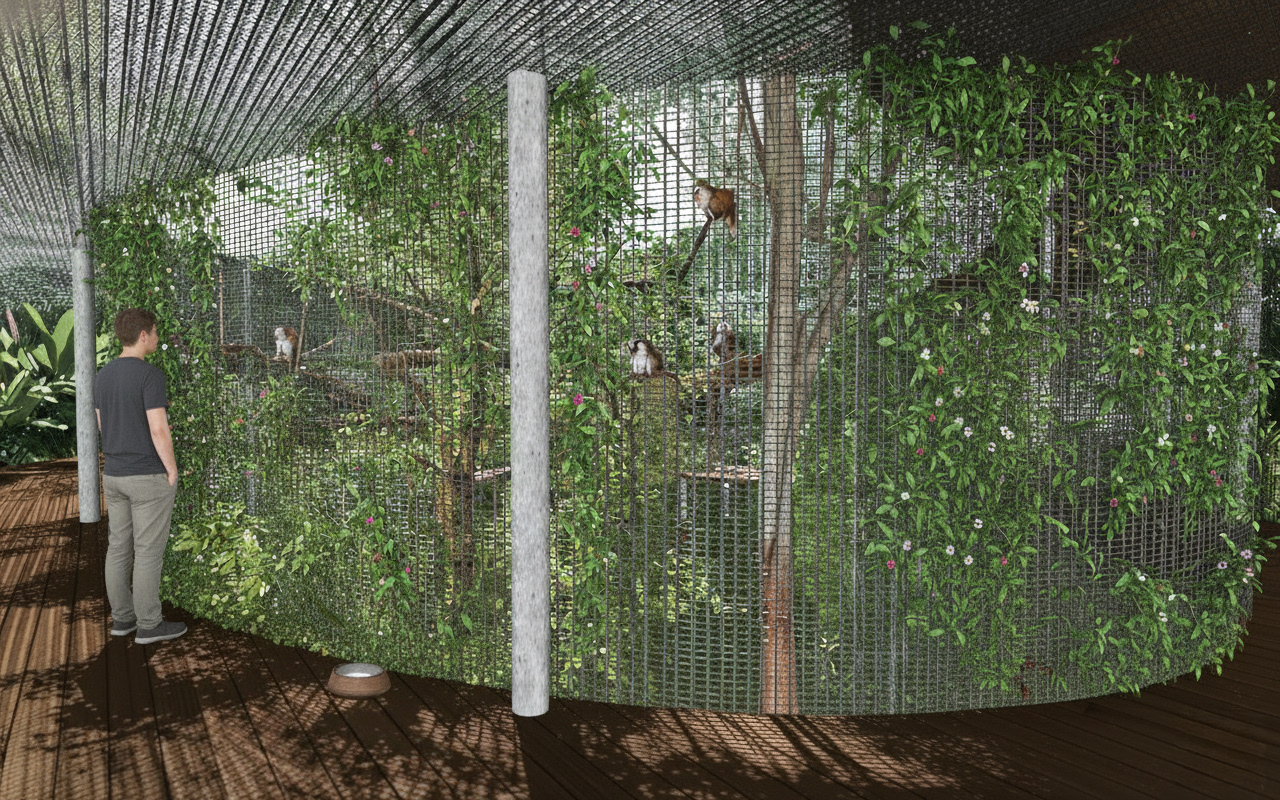
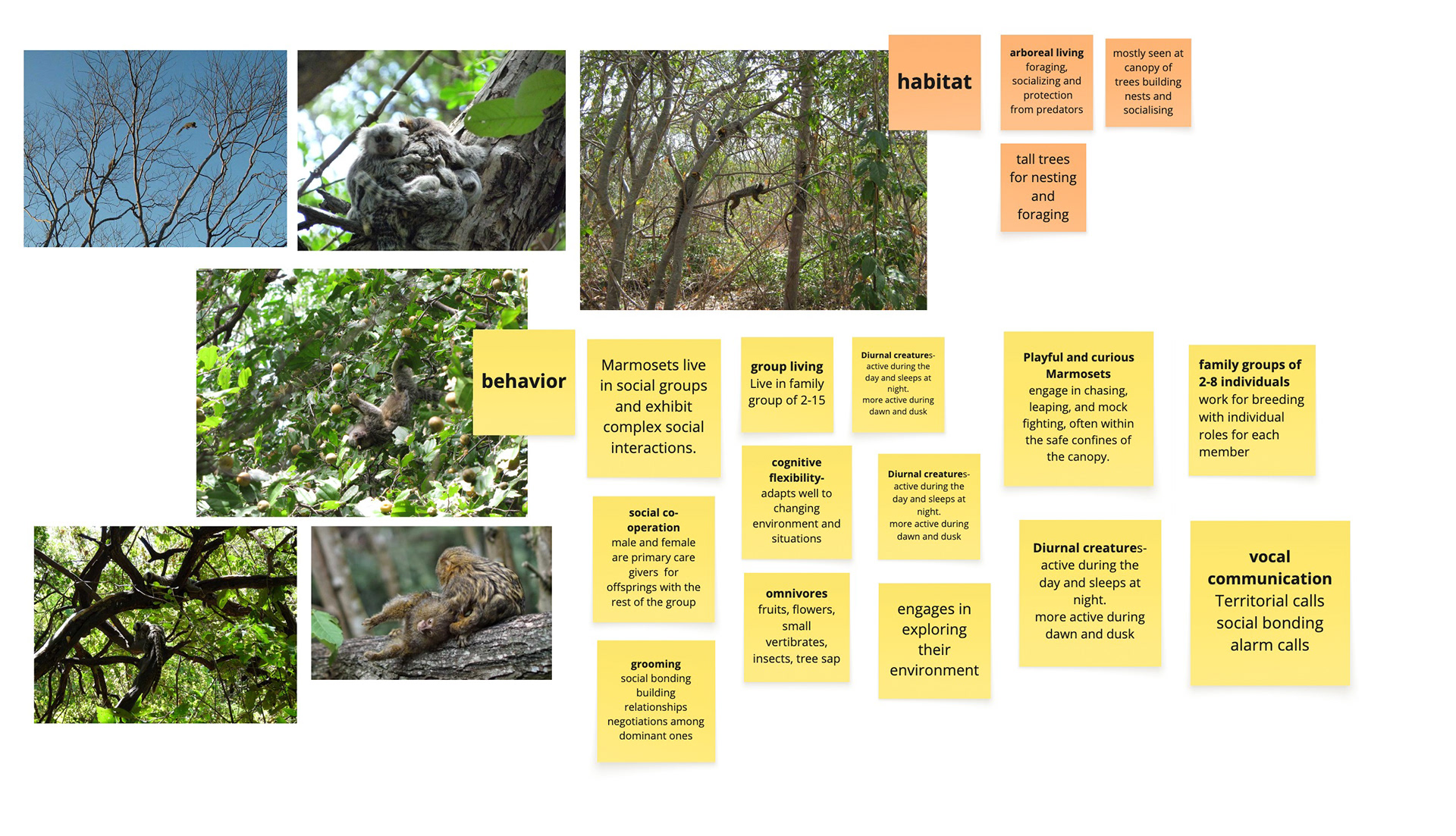
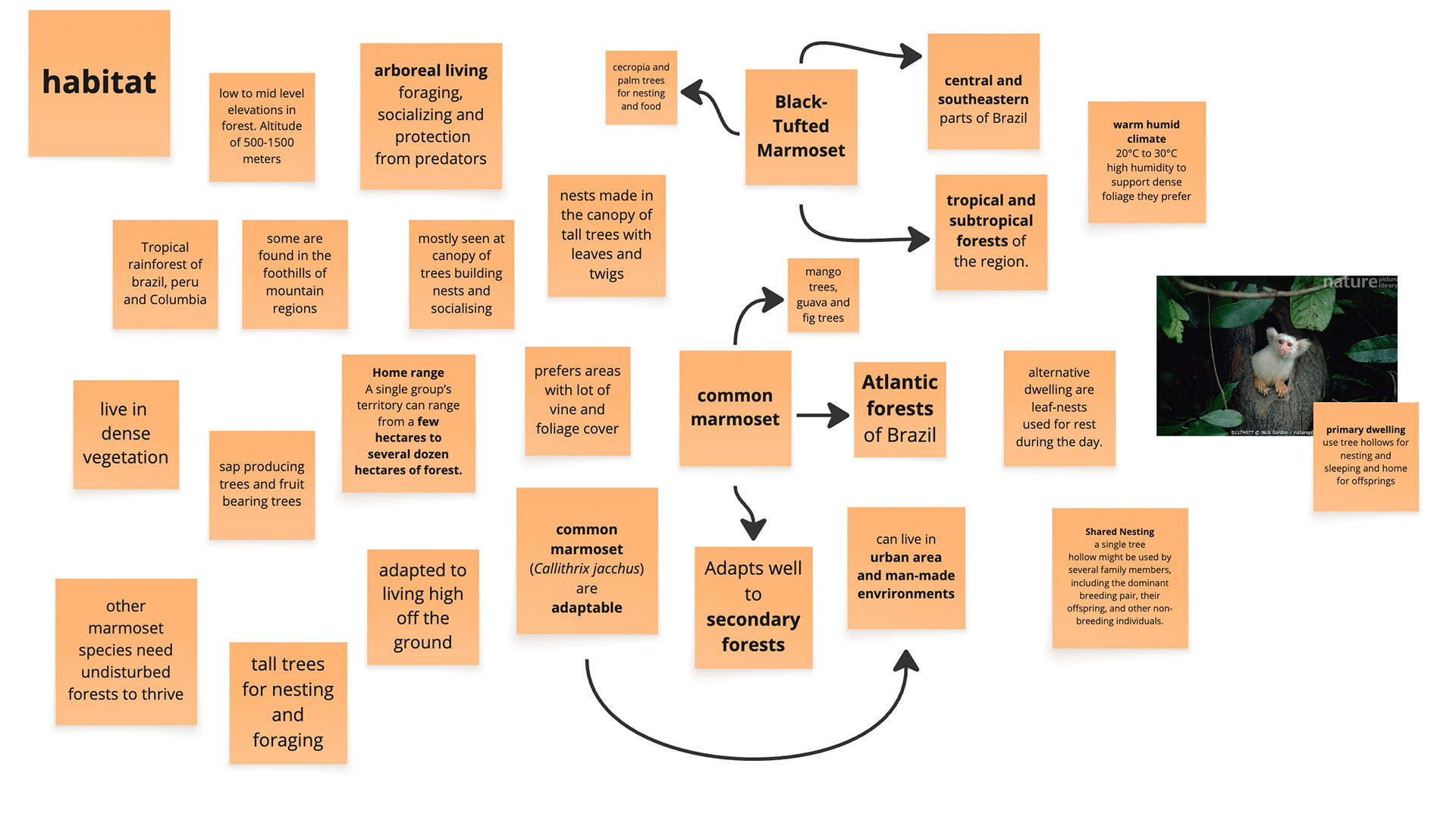
Designed with a primary focus on primate welfare and rehabilitation, this project develops a specialised environment for rescued marmosets. The architecture functions as a bio-mimetic intervention, meticulously simulating the dense, vertical complexity of their original South American habitats. By integrating varied micro-climates, climbing structures, and foraging zones, the design facilitates natural behaviours essential for recovery, bridging the gap between captivity and the wild.
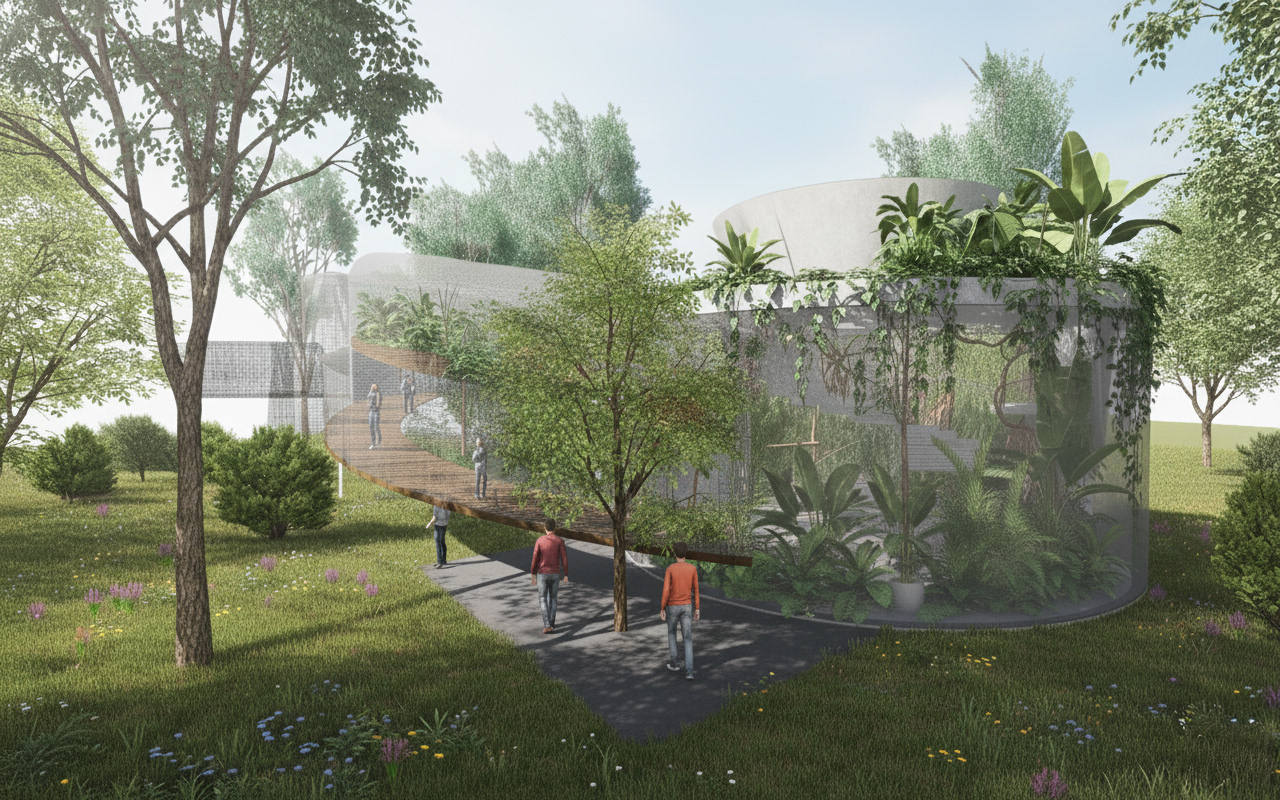
Vertical Circulation: The Canopy Gradient.
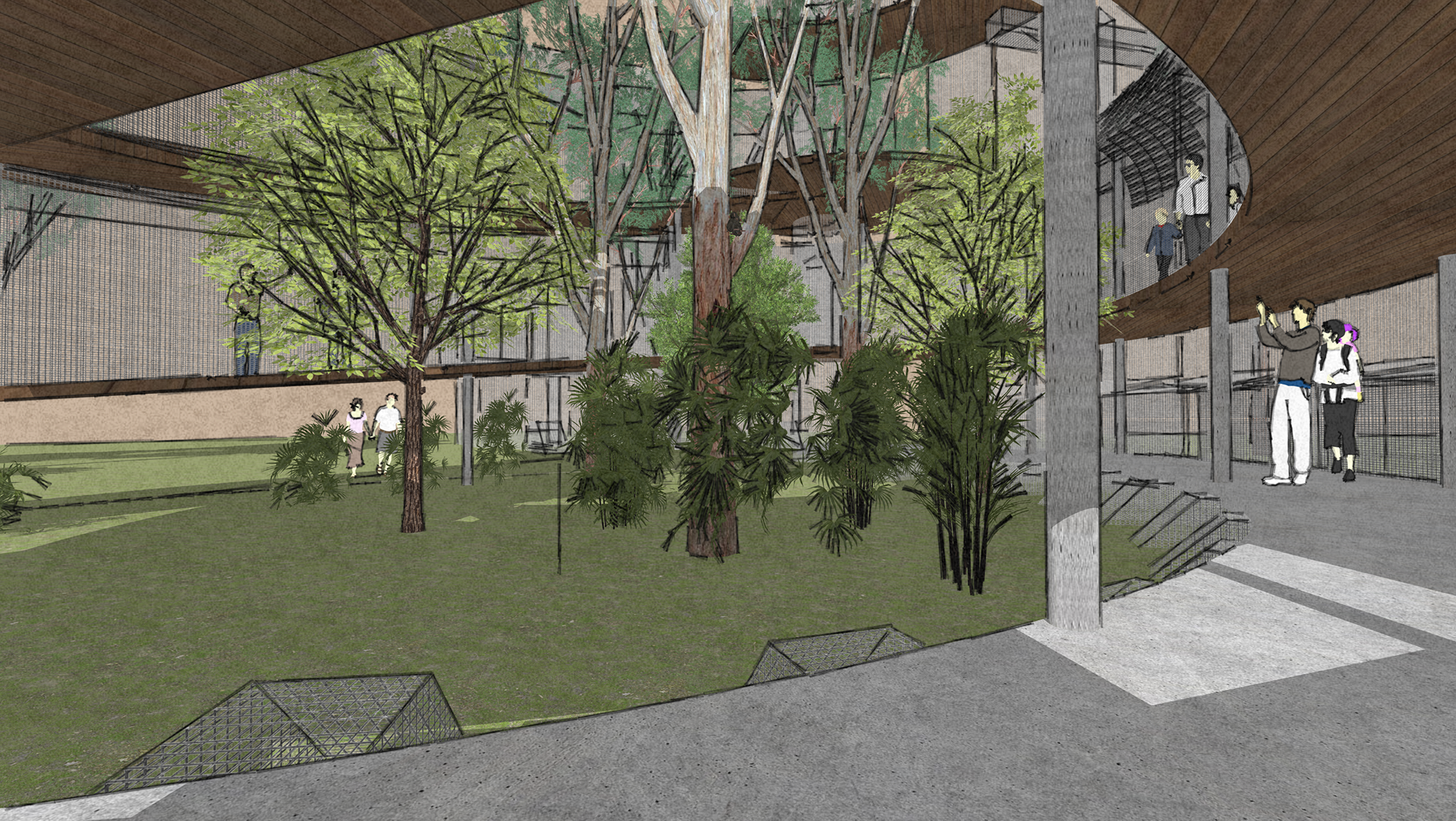
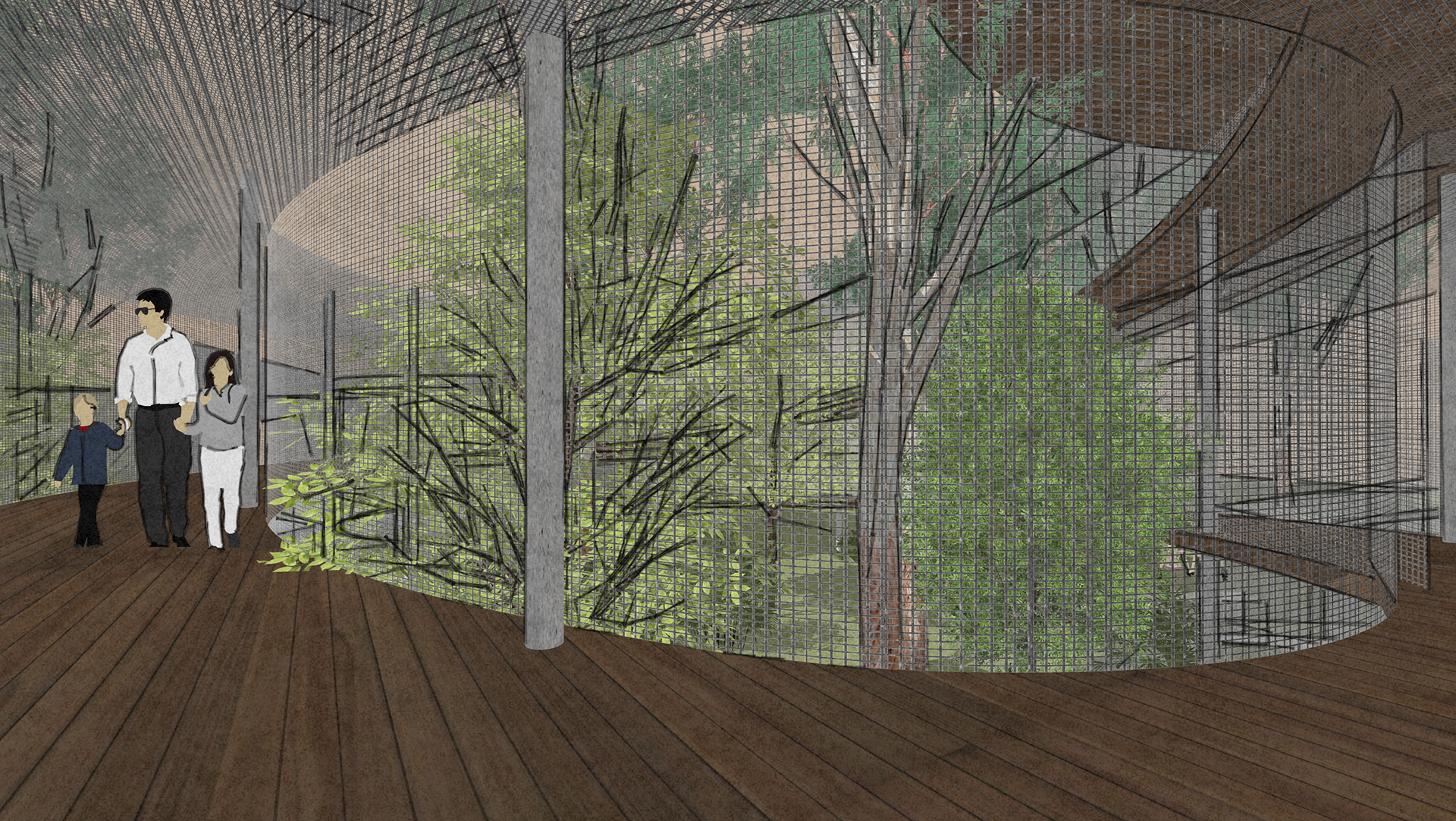
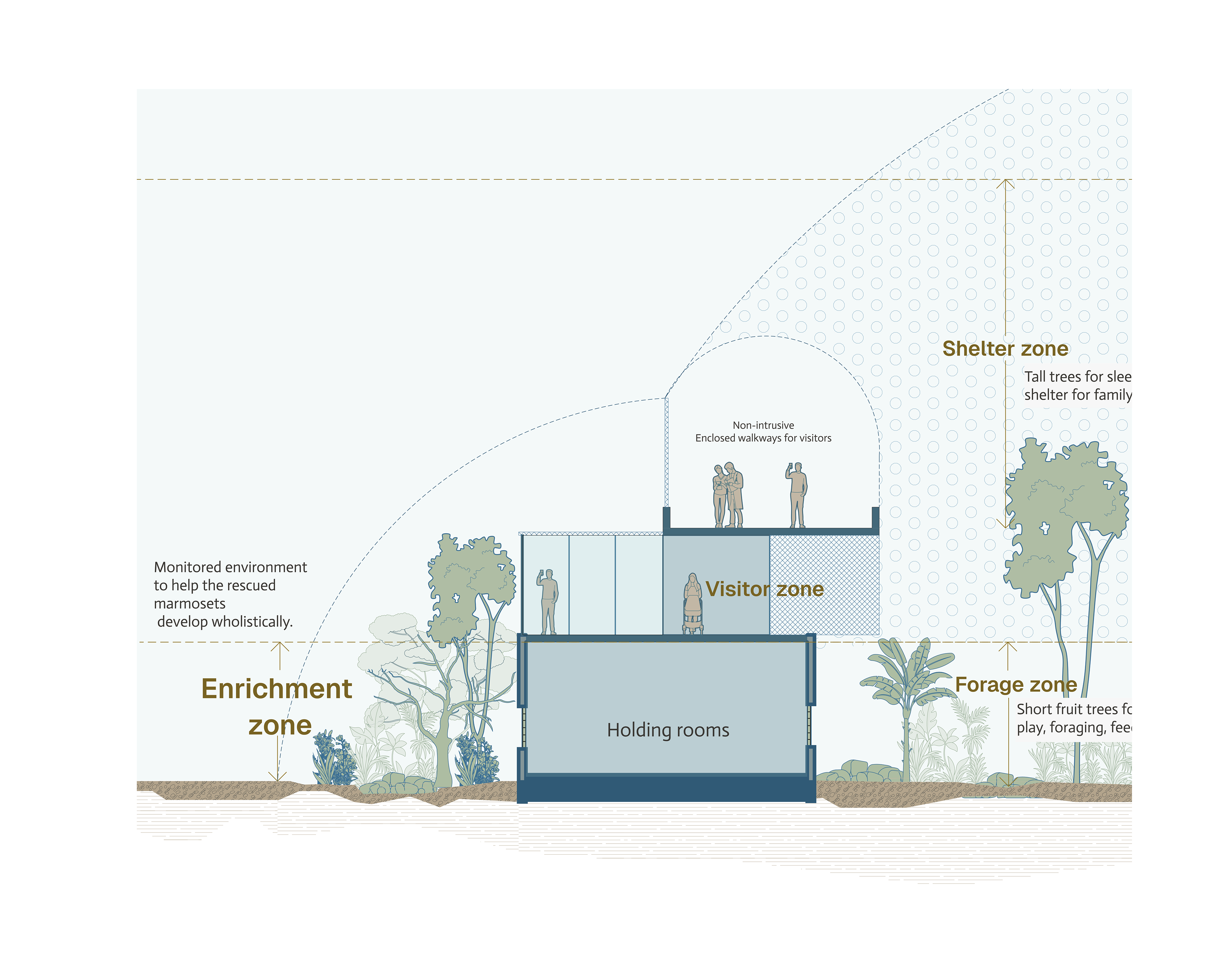
The enclosure is architecturally stratified to mirror the natural forest layers, moving from high-activity foraging zones to secure nesting heights. The architecture utilises a stratified verticality; by placing foraging opportunities at the periphery and social "safe zones" at the core, we use the space itself to dictate a healthy, natural movement pattern.
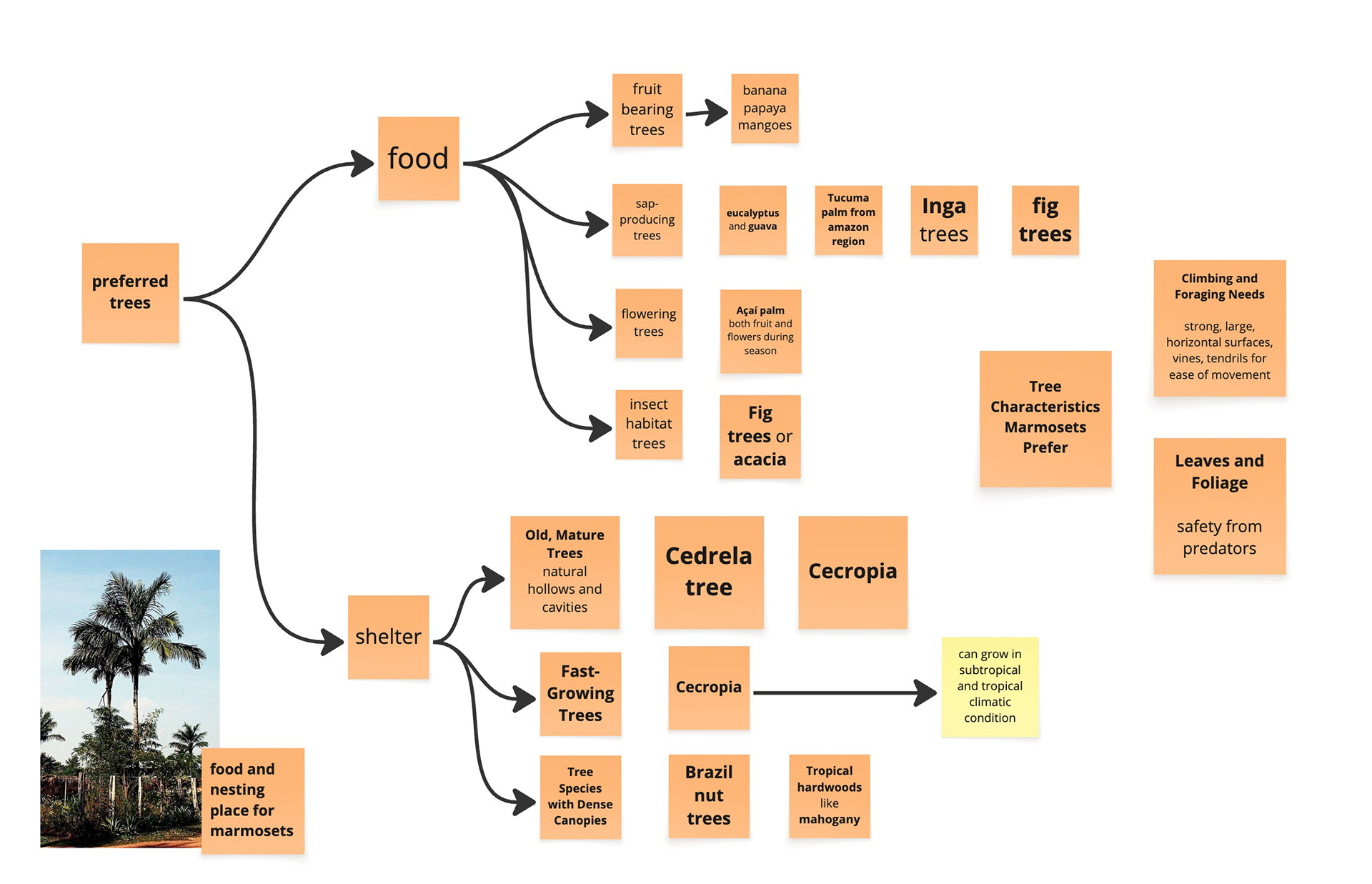
Along the perimeter, the planting of short fruit trees creates a low-to-mid-level "activity belt." This zone encourages horizontal leaping and manual foraging, essential for physical reconditioning.
The Central Emergent Zone: The centre of the habitat is anchored by tall, vertical timber structures and live trees. This "vertical core" facilitates instinctual climbing and provides a high-altitude sanctuary for grooming and social bonding, where the marmosets feel most secure from perceived ground-level threats.
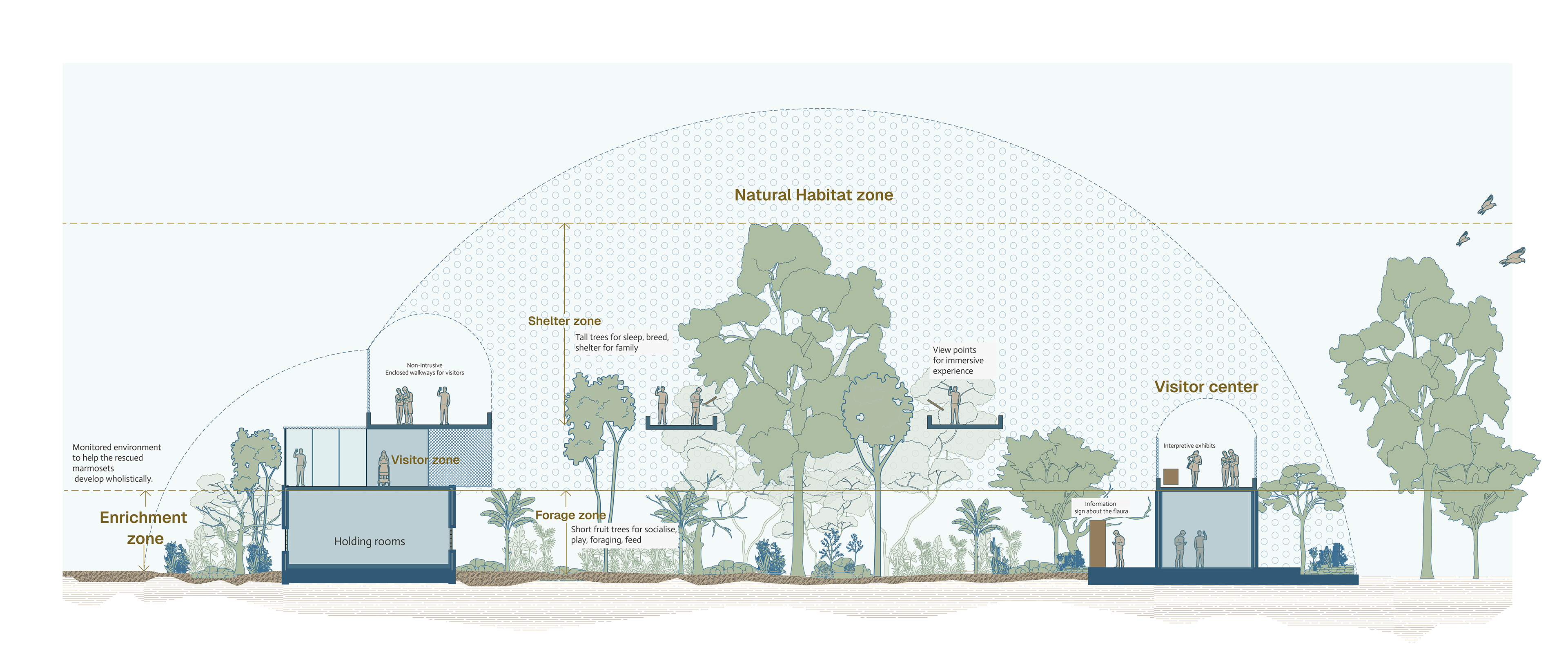
Conceptual stratification Section: Foraging Periphery vs. Social Core
Material Transitions: Tactile Rehabilitation
The material palette is designed as a sensory journey to transition the marmosets from the "sterile" surfaces of captivity to the "complex" textures of the wild.
The enrichment zones utilise a mix of smooth, treated timbers and recycled ropes to provide "safe" transitions for animals accustomed to artificial environments. As they move toward the central natural habitat, materials transition to rough-hewn barks, natural fibres, and varied soil compositions. These textures are not merely aesthetic; they provide the necessary friction for nail health and tactile stimulation, which triggers natural scent-marking and grooming behaviours.
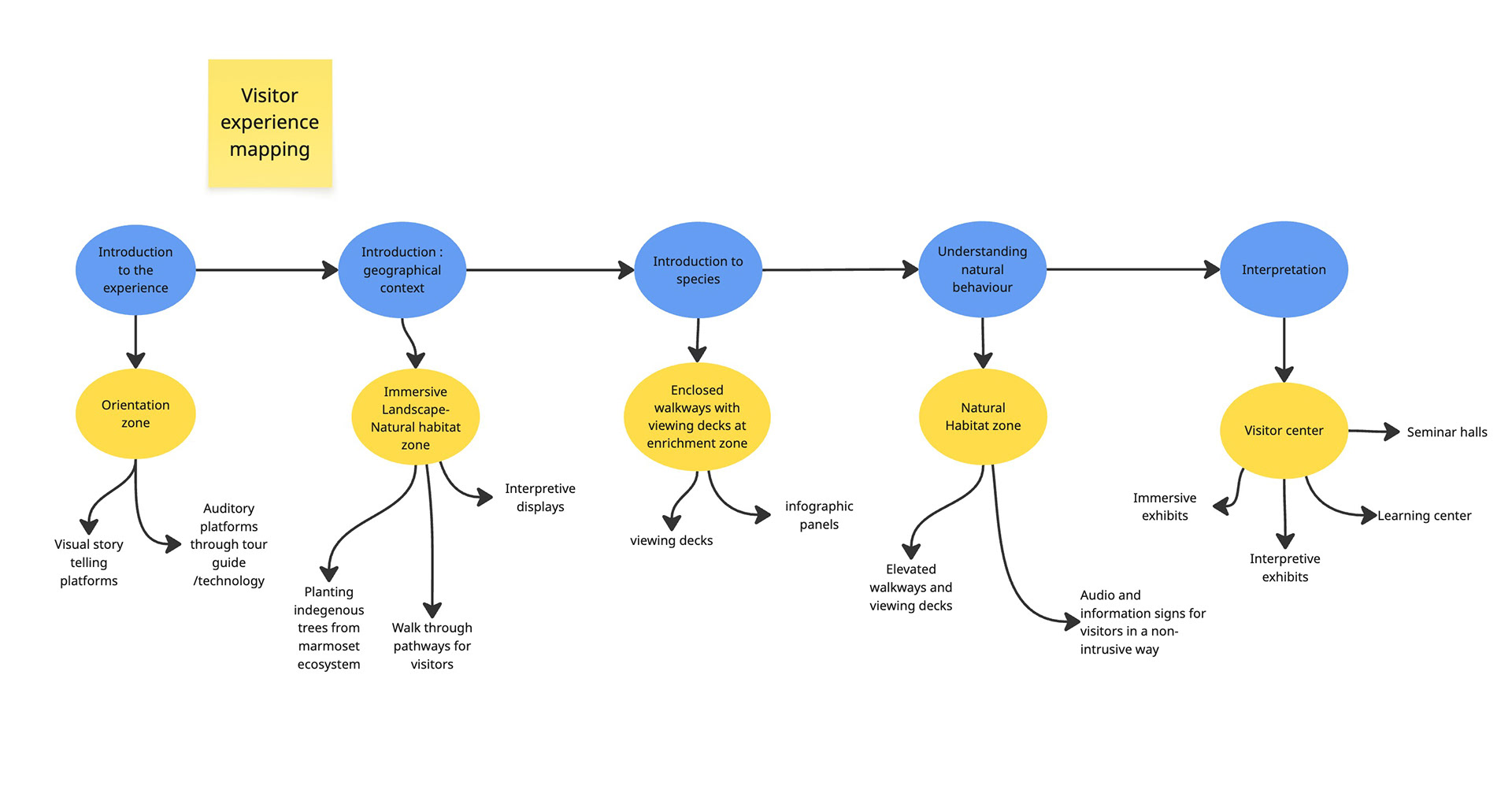
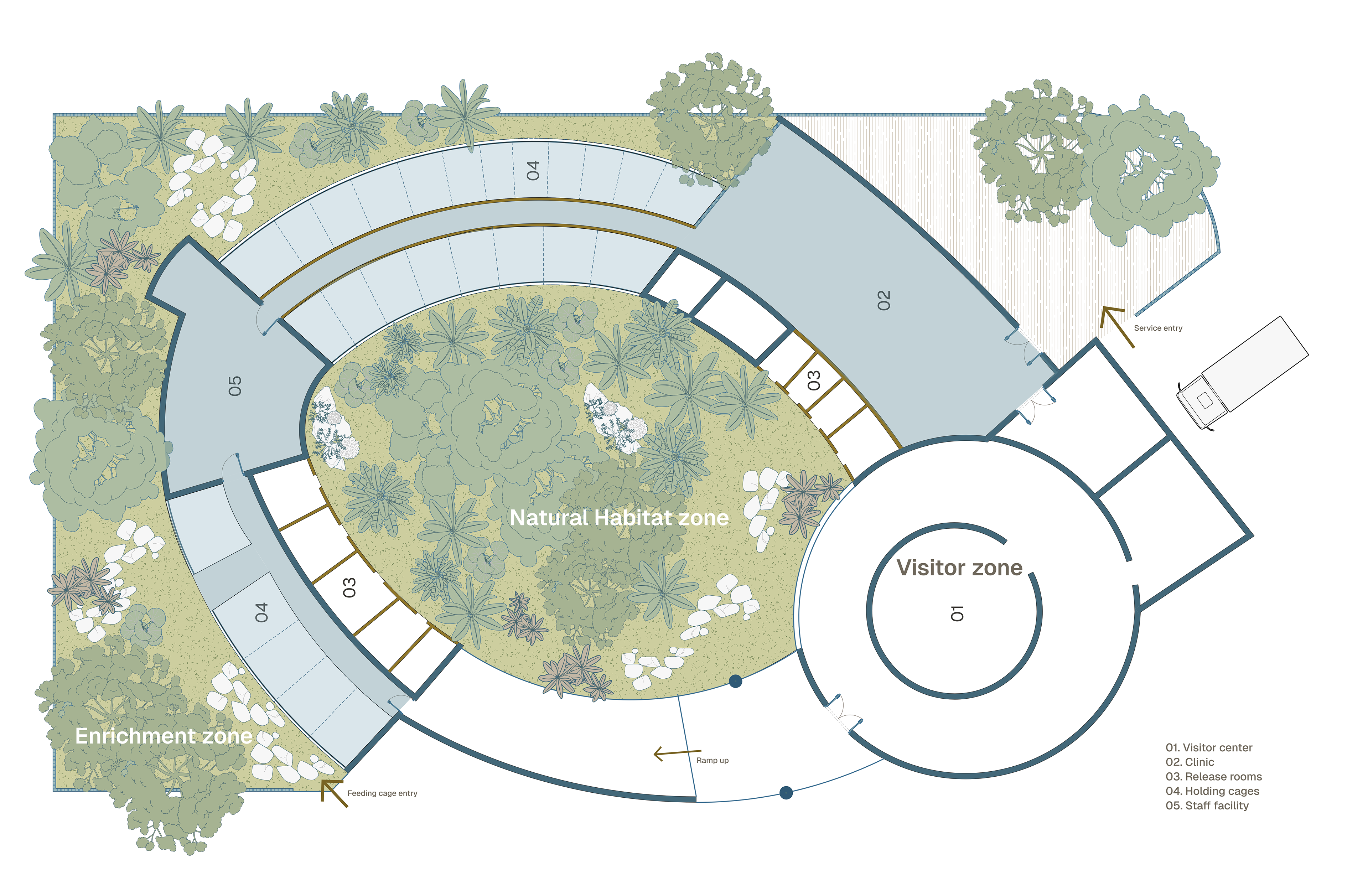
Concept design : Ground floor plan
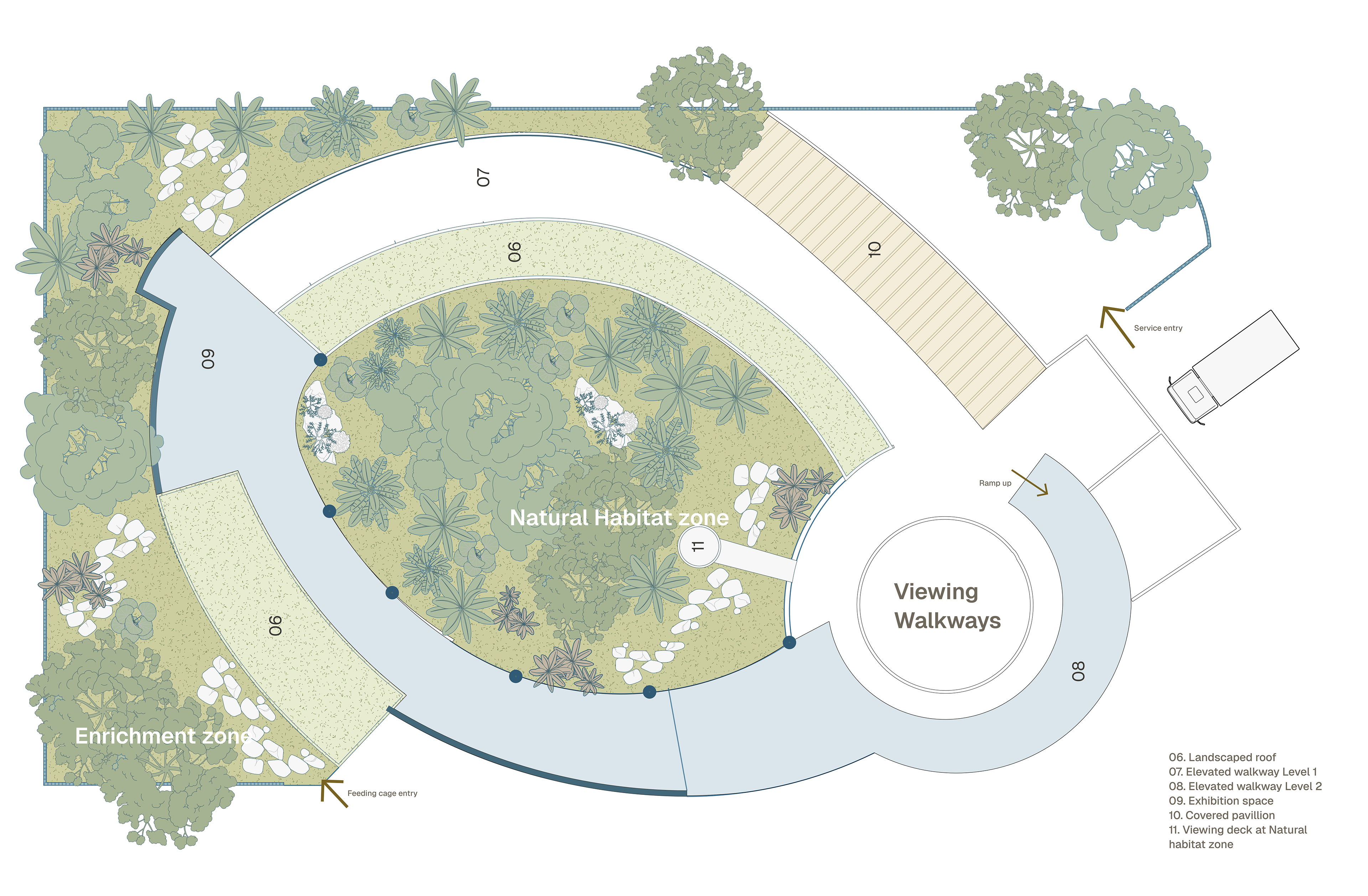
Concept design : Elevated walkway plan